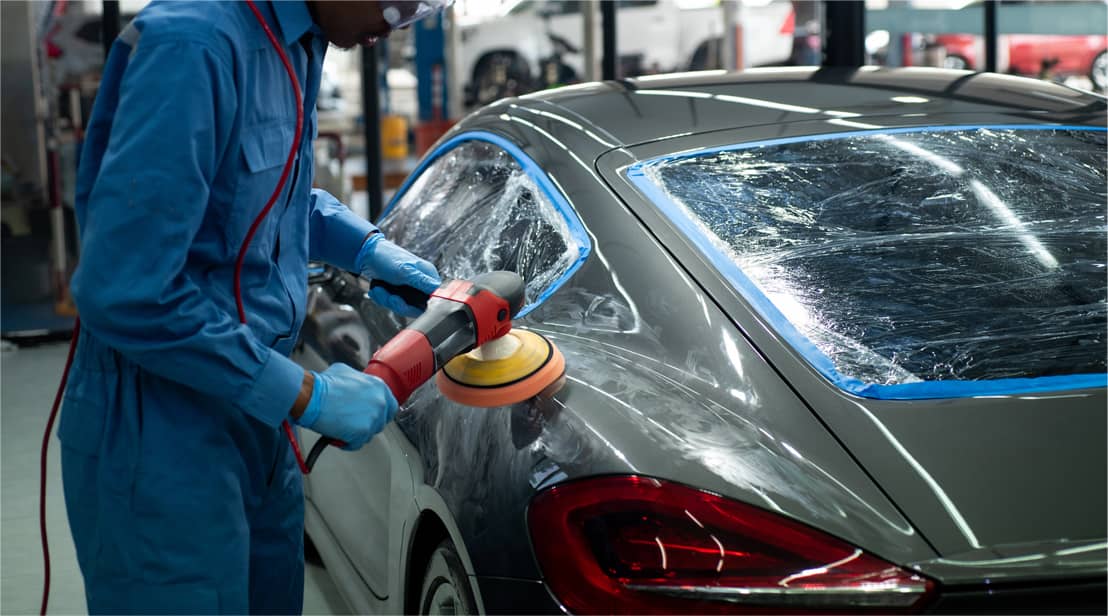
Specialist Car Chassis Alignment & Structural Car Jigging Manchester
Get a free quote. Call or text us 24/7 for a fast response.
Located 10 minutes away from Manchester City Centre.
When a vehicle is involved in an accident, even a minor one, the force of the impact can shift the chassis without any visible signs on the exterior. While you might only see a cracked bumper or a dented wing, the underlying structure may have moved by just a few millimetres.
That subtle shift is enough to make a car drive poorly, wear tyres unevenly, or "crab" sideways down the road. At Bodyshop Manchester, car body repair isn't just about making something look better; it is about carrying out proper accident repair and resetting the "skeleton" of your vehicle to its original factory position.
What is Car Jigging and Why is it Critical?
Car jigging is the technical process of securing a damaged vehicle onto a specialized alignment bench (a "jig") to pull the chassis back to its precise factory coordinates.
When a car takes a hit, the outer panels often hide the real issue: structural deformation. The jig locks the car in place, allowing us to use manufacturer-specific measurements to pull everything back square, straight, and level. You can think of it as resetting the vehicle's foundation so that every other component—from suspension to body panels—sits exactly as it did when it left the factory.
When Does a Vehicle Require Structural Jigging?
A car requires jigging whenever any part of the structural frame has moved due to an impact. This isn't reserved for major crashes; even a "small accident" can twist a chassis out of alignment. Common scenarios include:
- Front or rear-end collisions.
- Heavy impacts to a corner or wheel.
- Side impacts that have pushed in the sills or floor.
- Hitting a kerb or pothole hard enough to bend more than just the tracking.
Common Signs Your Chassis is Out of Alignment:
- The steering wheel is no longer straight when driving level.
- The car pulls or drifts to one side.
- Uneven tyre wear: tyres wearing down rapidly on one edge.
- Crabbing: the rear of the car travels slightly sideways compared to the front.
- Doors, the bonnet, or the boot no longer line up or close smoothly.
- The car feels unsettled or "nervous" over bumps.
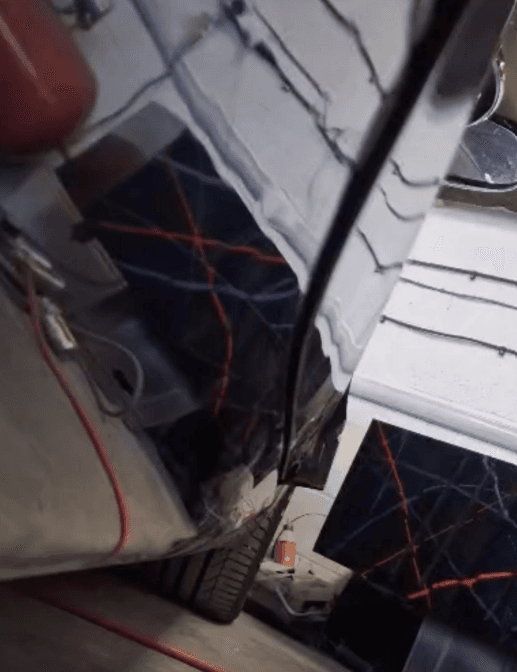
The Dangers of a Bent Chassis
A bent chassis is a serious safety and mechanical issue. If left uncorrected, it leads to:
- Crabbing: the car looks like it is travelling diagonally.
- Suspension geometry issues: nothing sits level, leading to premature component failure.
- Reduced crash protection: a compromised structure cannot absorb impact energy as designed in a future accident.
- MOT failure: structural misalignment is a common cause for safety-related failures.
Our Professional Car Jigging Process
At our Manchester workshop, we follow a strict multi-stage process to ensure structural integrity:
- Fixed anchoring: The car is secured to a heavy-duty jig bench at fixed anchor points.
- OEM data comparison: We pull the specific manufacturer measurements for your exact model.
- Deformation identification: We identify exactly where the structure has shifted and by how many millimetres.
- Precision pulling: Using hydraulic towers and clamps, we pull the chassis sills, floors, or mounting points until they perfectly match factory data.
- Millimetre-perfect re-measurement: We verify the alignment to the millimetre before any cosmetic work begins.
- Final reassembly: Only once the structure is straight do we proceed with the rest of car body repair Manchester.
Will a Jigged Car Drive the Same?
If the jigging is performed correctly using manufacturer data, you should not be able to tell the car was ever damaged. A properly jigged car will drive straight, feel stable, and maintain factory panel gaps. As an independent Bodyshop Manchester specialist, we ensure the car is just as structurally sound as the day it was built.
Measurement points are checked against manufacturer chassis data so alignment matches factory coordinates across sills, floors and mounting points.
Car Jigging Costs & Insurance Coverage
The cost of structural correction depends on the severity of the misalignment:
Is Car Jigging Covered by Insurance Approved Repairs?
In most cases, insurers cover the cost of jigging. Because it is the only proper way to restore a car's safety and geometry, insurance companies almost always approve this stage of accident repair when carried out by trained technicians using approved equipment. Here you can find more about our insurance repair process.
Expert Structural Assessment in Manchester
If your car has had a bump and the steering feels "off," the panel gaps look uneven, or you suspect the chassis is out of line, we can provide a professional assessment. Bodyshop Manchester specialises in structural alignment for prestige and performance vehicles.
Contact us today for a straightforward assessment or to discuss your repair.
Visit us: 298 Langley Road South, Salford, M6 6ST